The Marquis de Dollon: La Goupillère's Forgotten Branch
One 15th-century lord, two branches: one stayed at La Goupillère, the other rose to the marquisate of Dollon before dying out at the Revolution.
In the 15th century, one lord's two sons founded two very different family lines: one stayed at La Goupillère, the other rose to the rank of marquis before dying out at the Revolution. Here is the forgotten story of the marquis de Dollon branch.
Two branches from one lord
Pierre de la Goupillère, lord of La Goupillère and Courgeon, was still alive in 1483 — his sons are at the heart of the precedence dispute with the Moreau family recorded on the epitaph in the church of Saint-Hilaire-le-Lierru. His marriage to Jeanne de Clinchamp produced two sons who each founded a branch: Jean, the elder, who kept the family seat at La Goupillère along with the Courgeon lordship; and René, the younger, who sought his fortune nearby at Dollon.
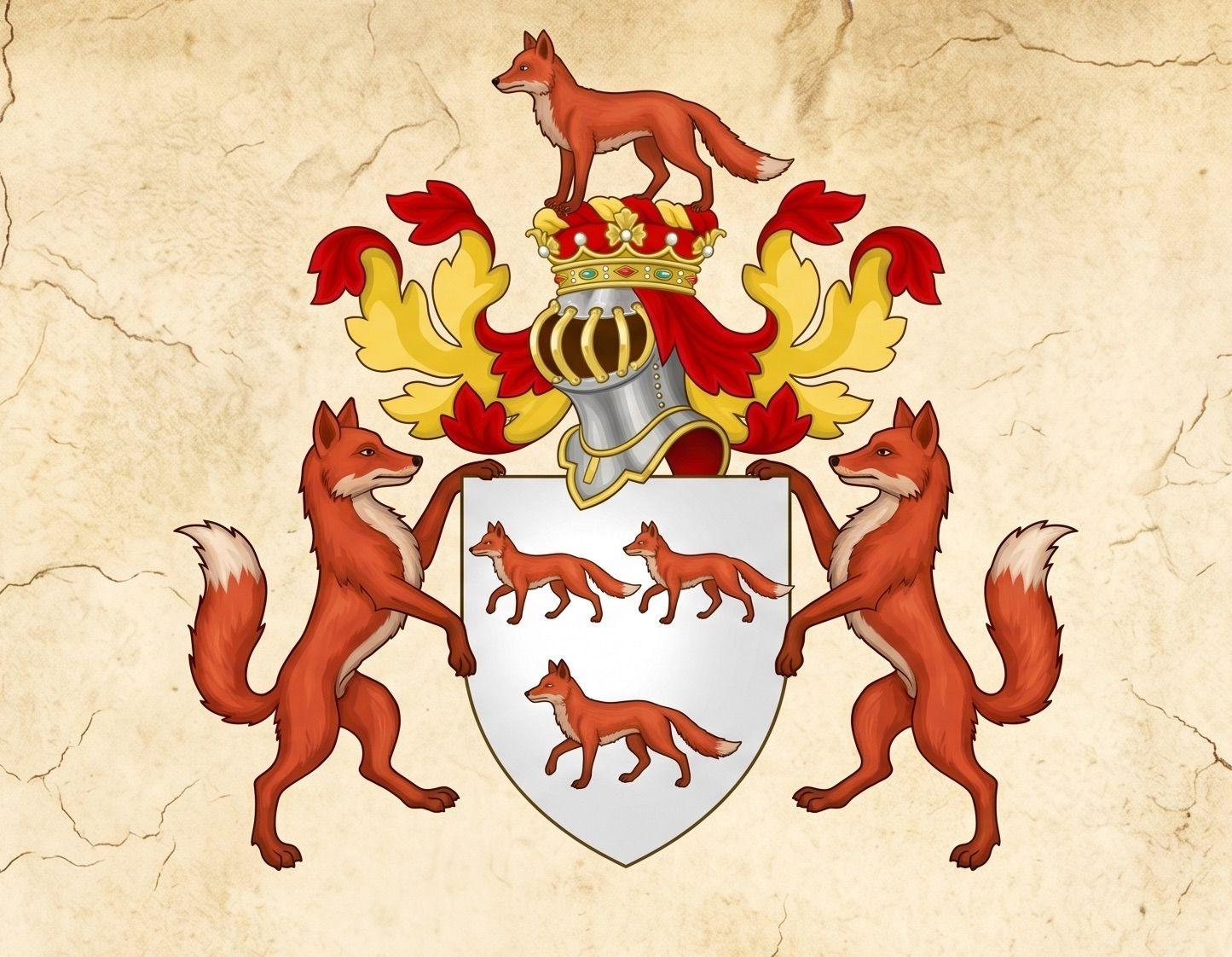
Both branches kept the same coat of arms, three red foxes on a silver field, and both had their nobility formally confirmed during the great inquiry of 1666-1668, by ruling of M. de Machault, intendant of Tours — official proof that the two lines shared the same blood.
From barony to marquisate
It was René's great-grandson, Marin de la Goupillère (1594-1678), who brought the younger branch into the wider history books: as baron de Dollon, he is still remembered on his epitaph as “l'honneur des Manceaux” (the pride of the Maine region). His grandson Pierre-Gaspard de la Goupillère (1663-1714) rose a step further, becoming the first marquis de Dollon. A gentleman-in-ordinary of the King's Chamber, he married Marie-Anne-Charlotte Le Vayer, from a prominent family of magistrates from Le Mans, in 1691.
The last marquis and the end of a line
The title then passed to Gaspard-René de la Goupillère (1695-1768), a cavalry captain, and then to Charles-Gaspard de la Goupillère de Dollon (1732-1794), the last marquis de Dollon of the Ancien Régime. In 1789 he took part in the Maine nobility's assemblies held to elect deputies to the Estates-General. The Revolution swept away the château de Dollon, which was seized and dismantled — that château, not La Goupillère's, is the one that disappeared. The branch gradually died out in the early 19th century.
And today
While the Dollon branch rose to its marquisate before fading away, the elder branch stayed at La Goupillère: the estate passed down through successive marriages to the de Hercé family and then the Le Saige family, who still live there today. To discover this estate where nine centuries of this family history meet, La Sellerie welcomes guests in the château's former harness room.
Frequently asked questions
- What was the marquisate of Dollon?
It was the title held by the younger branch of the de la Goupillère family, starting with Pierre-Gaspard de la Goupillère (1663-1714), first marquis de Dollon. Dollon was a separate lordship from La Goupillère, acquired by this branch in the 16th-17th century.
- Does the château de Dollon still exist?
No — it was seized as national property and then dismantled during the Revolution, which led to this branch's gradual extinction. The château de la Goupillère, by contrast, survived the same period and was bought back by the family.
- What is the link between the marquis de Dollon and La Goupillère's current owners?
A common ancestor: Pierre de la Goupillère, lord of La Goupillère and Courgeon in the 15th century. His elder branch, which stayed at La Goupillère, passed down through marriages to the de Hercé family and then the Le Saige family, who still live there.
Want to stay at La Goupillère?
Discover La Sellerie, a historic outbuilding of the estate, 30 minutes from Le Mans.
Book La Sellerie